About the book
A story to share together.
An invitation to talk, listen and make room for every part of a child's story.
Buy on Amazon · £11.99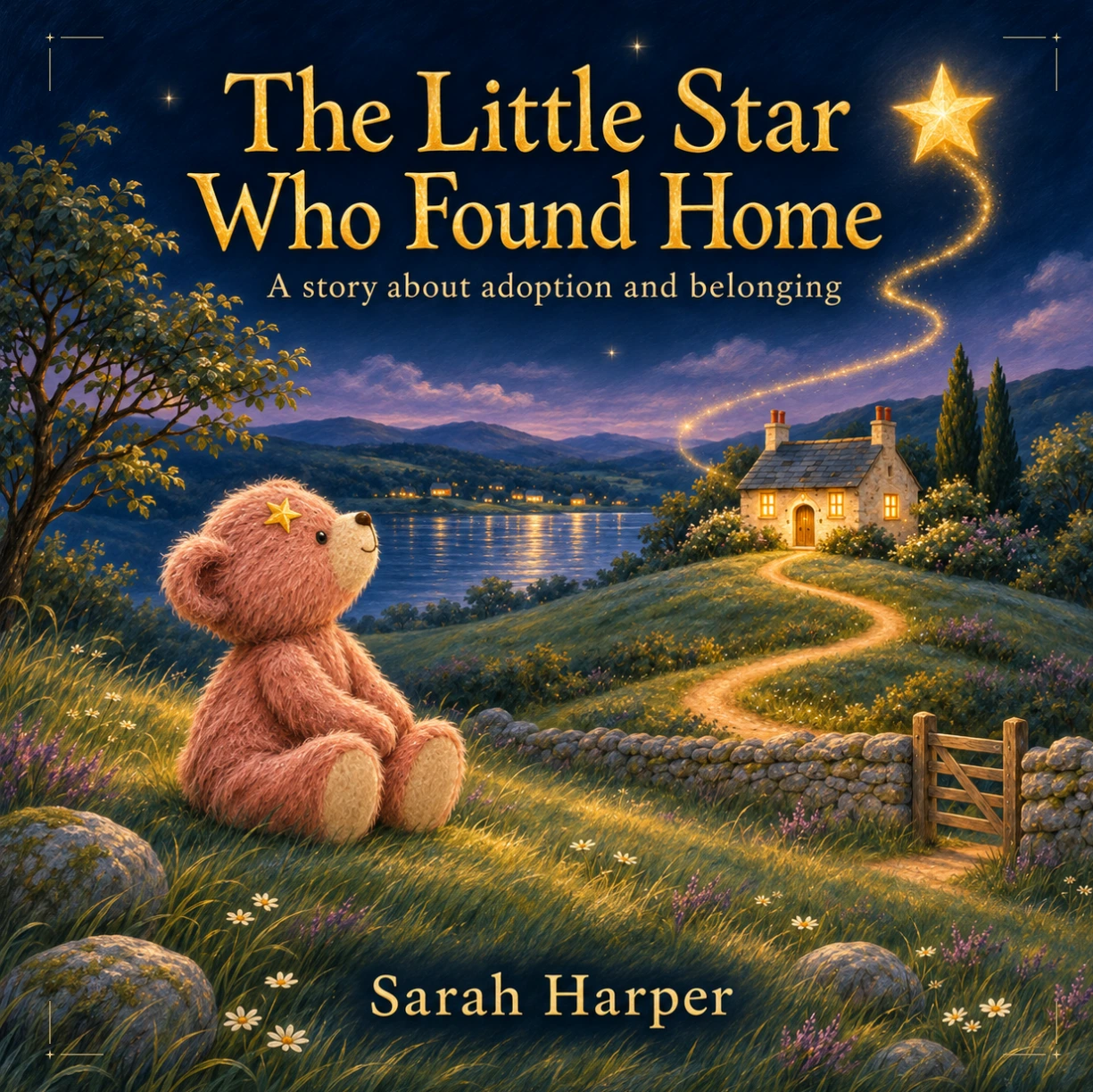
The Little Star Who Found Home
A story about adoption and belonging
Every child has a story. Every part of it matters.
From waiting for a phone call to bedtime stories, big questions and kitchen dancing, it celebrates growing together while making space for a child's beginnings. Written for children and the grown-ups reading beside them, it welcomes curiosity, acknowledges different feelings and includes a note for grown-ups to help keep conversations open.
A child's story begins before adoption. This book follows a journey from those beginnings, through meeting adoptive parents, to the little everyday moments that make a shared home.
It offers a starting point for honest conversations about adoption, birth family, identity and feelings. Children can ask questions in their own time. Their story belongs to them.
And whatever circumstances led to adoption, they were never the child's fault.
What happens in the story
From a phone call to a forever home.
The story begins with a mummy and daddy waiting for a very special phone call — the one that tells them a little star is on the way. Then comes "Once Upon a You": the child's own beginning, before they ever met, told gently and honestly.
We follow the day the child comes home — new rooms, new smells, new voices — and the small, brave steps of getting to know one another. There is a teddy hunt through the house, muddy wellies by the door, bedtime stories and kitchen dancing, and rather a lot of snacks along the way.
The book also makes room for the bigger things: questions about birth family, feelings that change from day to day, and the truth that a child's story started before adoption — and that none of it was ever their fault.
It ends with a question box and a drawing page for the child's own thoughts, and a gentle note for the grown-ups reading beside them — because the best bits of the story are the ones still to come.



- Format
- Paperback
- Size
- 8.5 x 8.5 inches
- Pages
- 42
- Age range
- 4–7
- Printing
- Full colour
- Price
- £11.99
Written for ages 4–7 — and little ones from 3 will love the pictures, the rhythm and spotting the pink teddy.
Now available on Amazon
The paperback is on sale now — 42 pages, full colour, £11.99. Ordering through Amazon sends it straight to your door.
Buy the book on AmazonPlanning a class, group or gift order? Ask Sarah about group orders.
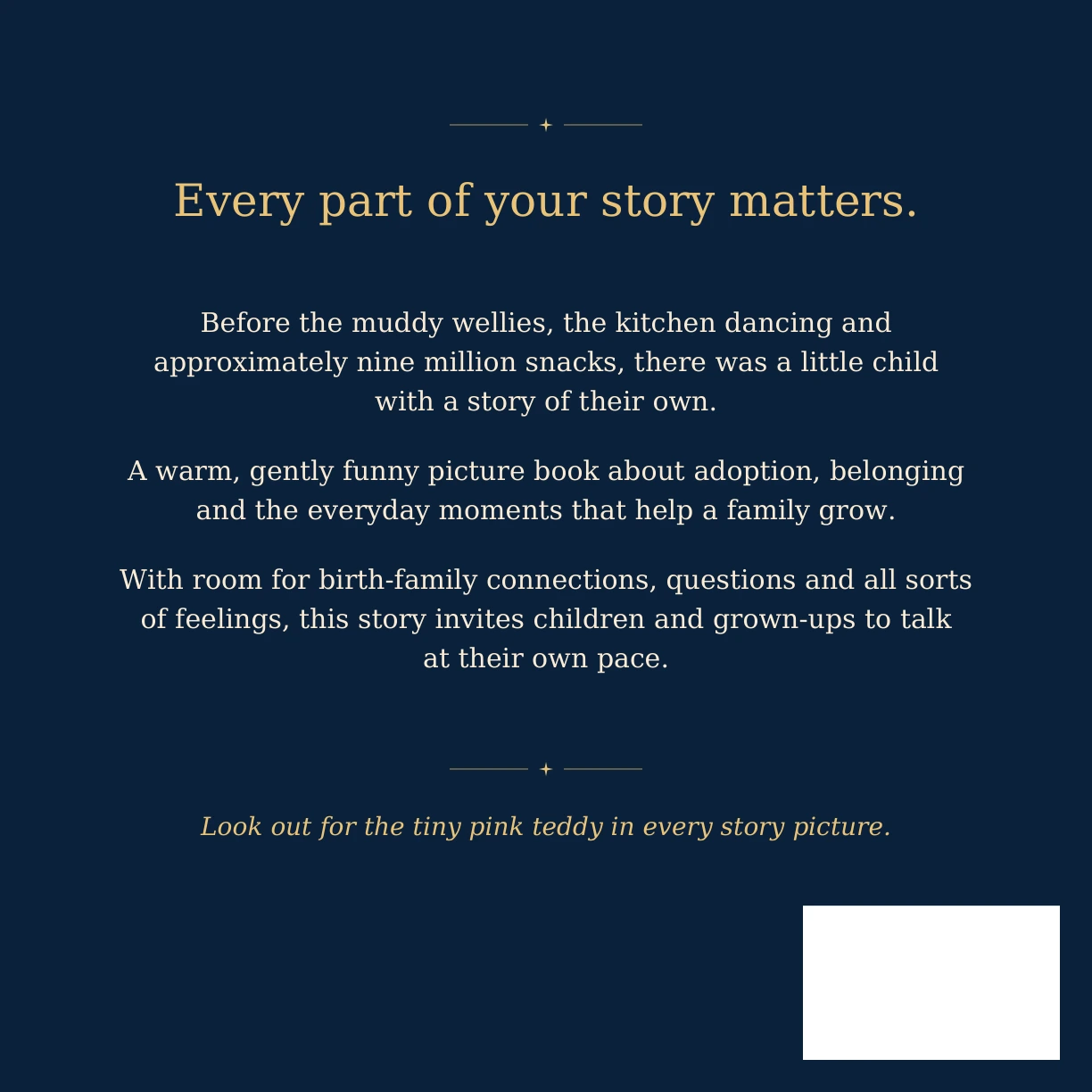
From the back cover
Every part of your story matters.
A warm, gently funny picture book about adoption, belonging and the everyday moments that help a family grow.
With room for birth-family connections, questions and all sorts of feelings, this story invites children and grown-ups to talk at their own pace.
Read a little togetherBetween the pages
Their story is still growing.
No hurry to feel at home
New rooms, new sounds, new people. The homecoming makes room for the size of that change, with grown-ups staying close and going slowly.
More than one feeling
Happiness, sadness, anger, curiosity or uncertainty — and even not wanting to talk. The book makes room for all of them.
More to discover
Questions about birth family may grow and change. The story ends with a promise to listen and help find out what can be known, not with every answer already settled.
For the child, and the people beside them.
An adoption story for children and adoptive families, with space for birth family, earlier carers and adoptees’ questions. Foster carers can explore its themes of feelings and belonging using the truthful details of a child’s own life; fostering does not always lead to adoption.
The question box and drawing page are invitations, not tasks. A child can talk, draw, listen—or leave a page for another day.
The ordinary, lovely bits.
Muddy wellies. Bedtime stories. Kitchen dancing. Rather a lot of snacks. Through it all, a little star — and one very loved pink teddy — remind the child that they have always been themselves.
Take a look inside